
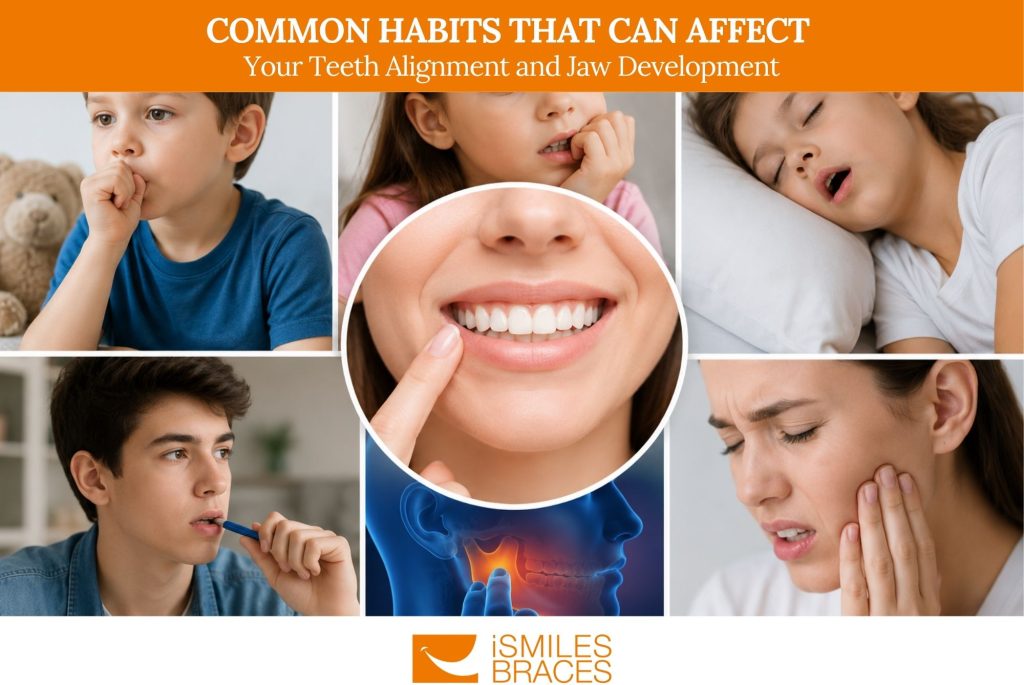
Your daily habits play a major role in shaping your smile, jaw alignment, and overall oral health. While genetics certainly influence the way teeth and jaws develop, many common behaviors during childhood, adolescence, and even adulthood can significantly affect the alignment of your teeth and the growth of your jaw. At iSmiles Braces, we believe education is the first step toward maintaining a healthy, confident smile for life.
Understanding which habits can negatively impact your oral development allows you to take preventive action early and seek orthodontic treatment when necessary. Whether you are a parent monitoring your child’s growth or an adult concerned about shifting teeth, learning about these habits can help protect your smile for years to come.
Why Teeth Alignment and Jaw Development Matter
Proper teeth alignment and balanced jaw development are essential for more than just aesthetics. When your teeth and jaws are aligned correctly, you benefit from:
- Improved chewing and digestion
- Clearer speech
- Reduced risk of tooth wear
- Better breathing and airway function
- Easier oral hygiene maintenance
- Lower risk of TMJ disorders and jaw pain
- Enhanced confidence and smile appearance
When certain habits interfere with oral development, they can contribute to issues such as crowding, overbites, underbites, crossbites, open bites, and jaw misalignment.
Common Habits That Can Affect Teeth Alignment and Jaw Development
1. Thumb Sucking and Pacifier Use
Thumb sucking is a natural reflex for infants and young children, but prolonged habits can create orthodontic problems over time.
How It Affects Oral Development
Extended thumb sucking or pacifier use can place constant pressure on the developing teeth and jaw. This may lead to:
- Protruding front teeth
- Open bites
- Narrow upper jaw
- Misaligned bite patterns
When It Becomes a Concern
Most orthodontists recommend stopping thumb sucking and pacifier use by age 3 to minimize long-term effects on jaw development.
2. Mouth Breathing
Mouth breathing is more than just a habit—it can sometimes indicate airway or nasal obstruction issues.
Effects of Mouth Breathing
Chronic mouth breathing can contribute to:
- Narrow dental arches
- Elongated facial growth
- Crooked teeth
- Improper jaw positioning
- Dry mouth and increased cavity risk
Children who primarily breathe through their mouths may also experience poor sleep quality and facial development concerns.
Common Causes
- Allergies
- Enlarged tonsils or adenoids
- Chronic nasal congestion
- Deviated septum
Early evaluation can help prevent long-term orthodontic complications.
3. Tongue Thrusting
Tongue thrusting occurs when the tongue pushes against the teeth while swallowing or speaking.
Potential Orthodontic Issues
Over time, tongue thrusting can cause:
- Open bites
- Forward movement of front teeth
- Speech difficulties
- Bite misalignment
Orthodontic treatment combined with myofunctional therapy may help correct these issues.
4. Nail Biting
Nail biting is a common stress-related habit that may seem harmless but can negatively affect your smile.
Dental Consequences
Frequent nail biting may lead to:
- Chipped teeth
- Tooth shifting
- Jaw strain
- Increased risk of teeth grinding
The repeated pressure placed on teeth can gradually alter alignment.
5. Teeth Grinding (Bruxism)
Teeth grinding often occurs during sleep and can place excessive stress on teeth and jaw joints.
Signs of Bruxism
- Worn enamel
- Jaw pain
- Headaches
- Tooth sensitivity
- Cracked teeth
Impact on Alignment
Over time, grinding can contribute to bite changes and jaw discomfort that may require orthodontic or restorative treatment.
6. Poor Posture
Believe it or not, posture can influence jaw positioning and facial development.
How Posture Impacts the Jaw
Poor head and neck posture may:
- Affect jaw alignment
- Increase TMJ stress
- Influence facial muscle balance
- Contribute to bite problems
Proper posture supports healthy airway function and balanced facial growth.
7. Chewing on Hard Objects
Chewing on pens, ice, pencils, or other hard objects can damage teeth and affect alignment.
Risks Include
- Cracked or chipped teeth
- Uneven tooth wear
- Increased jaw tension
- Tooth movement over time
Avoiding these habits helps preserve both dental health and orthodontic stability.
8. Premature Tooth Loss
Losing baby teeth too early due to decay or injury can disrupt natural tooth eruption patterns.
Why It Matters
Baby teeth act as placeholders for permanent teeth. Early tooth loss can lead to:
- Crowding
- Shifting teeth
- Impacted teeth
- Bite irregularities
Orthodontic monitoring during childhood can help guide proper development.
How Orthodontic Treatment Can Help
At iSmiles Braces, we provide customized orthodontic solutions designed to improve both smile aesthetics and jaw function.
Treatment Options May Include:
- Traditional braces
- Clear aligners
- Early orthodontic intervention
- Space maintainers
- Bite correction appliances
- Retainers
- Growth modification treatments
Early evaluation can often prevent more severe orthodontic issues later in life.
Signs You Should Schedule an Orthodontic Evaluation
You or your child may benefit from an orthodontic consultation if you notice:
- Crowded or crooked teeth
- Difficulty chewing or biting
- Mouth breathing
- Thumb sucking beyond age 3
- Jaw clicking or pain
- Speech difficulties
- Teeth grinding
- Early or late loss of baby teeth
The American Association of Orthodontists recommends children receive their first orthodontic evaluation by age 7.
Benefits of Early Orthodontic Intervention
Addressing habits and developmental concerns early can:
- Guide proper jaw growth
- Reduce the need for future extractions
- Improve bite alignment
- Enhance facial symmetry
- Prevent worsening orthodontic problems
- Improve confidence and oral health
Early treatment often leads to more efficient and successful outcomes.
Frequently Asked Questions (Q&A)
Can thumb sucking permanently damage teeth?
Yes, prolonged thumb sucking can lead to bite problems, protruding teeth, and jaw development issues if the habit continues beyond early childhood.
Is mouth breathing bad for jaw development?
Chronic mouth breathing can negatively affect facial growth, jaw positioning, and dental alignment, especially in children.
At what age should my child see an orthodontist?
Children should typically have their first orthodontic evaluation around age 7 to identify potential developmental concerns early.
Can adults develop alignment problems from habits?
Absolutely. Habits like teeth grinding, nail biting, and chewing on hard objects can contribute to tooth movement and jaw strain in adults.
What is tongue thrusting?
Tongue thrusting occurs when the tongue pushes against the teeth during swallowing or speaking, potentially causing alignment problems over time.
Can braces fix jaw alignment issues?
Yes, braces and other orthodontic appliances can often help correct bite and jaw alignment concerns depending on the severity of the issue.
Does poor posture really affect the jaw?
Poor posture can influence muscle balance and jaw positioning, which may contribute to TMJ problems and bite issues.
How can I stop teeth grinding?
Treatment may include stress management, night guards, orthodontic correction, or evaluation for underlying causes.
Can early orthodontic treatment prevent future problems?
In many cases, yes. Early intervention can guide proper jaw development and reduce the severity of future orthodontic issues.
Are clear aligners effective for bite correction?
Clear aligners can effectively treat many mild to moderate bite and alignment issues when supervised by an experienced orthodontic provider.
Protect Your Smile with Expert Orthodontic Care
Your everyday habits can have a lasting impact on your smile and oral health. Recognizing harmful behaviors early and seeking professional orthodontic care can help prevent long-term complications and improve overall dental function.
At iSmiles Braces, our experienced orthodontic team is committed to helping patients of all ages achieve healthy, beautiful smiles through personalized treatment plans and compassionate care.
👉 Contact Us Today to Schedule Your Consultation:
iSmiles Braces
490 North Main St, Suite 101
Corona, CA 92878
📞 Phone: (951) 444-9979
🌐 Website: ismilesbraces.com