
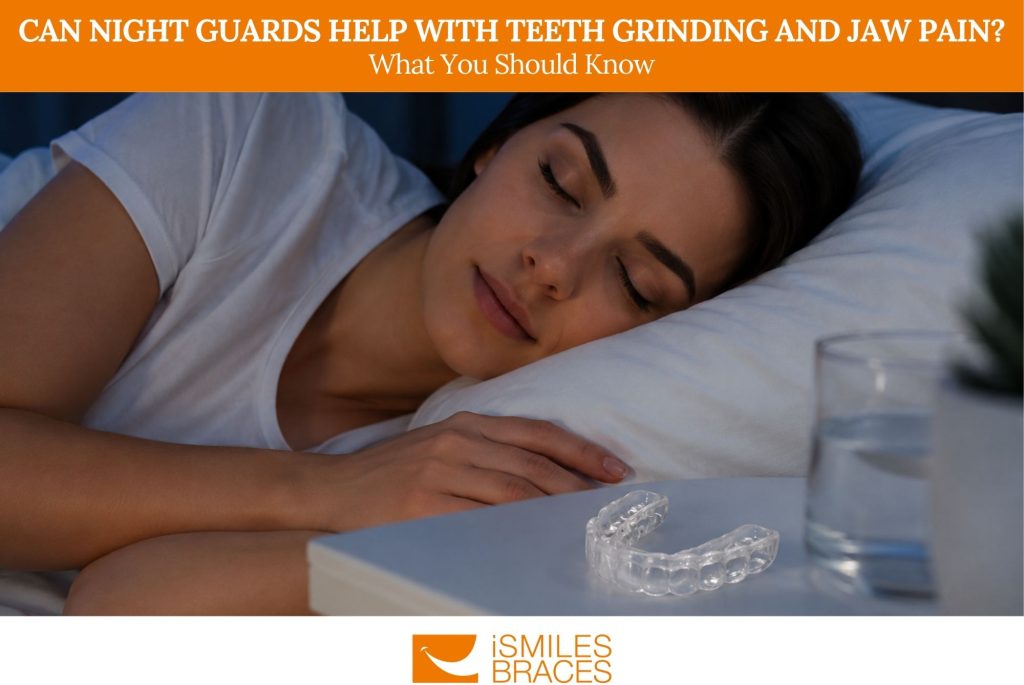
Teeth grinding and jaw pain can quietly disrupt your sleep, damage your teeth, and affect your overall quality of life. Many people wake up with headaches, sore jaws, worn teeth, or facial tension without realizing that nighttime teeth grinding—also known as bruxism—may be the cause. Fortunately, one of the most effective solutions for protecting your smile and reducing discomfort is a custom night guard.
At iSmiles Braces, we help patients find relief from grinding-related symptoms while protecting their long-term oral health. If you’ve been experiencing jaw pain, tooth sensitivity, or unexplained headaches, understanding how night guards work may help you take the next step toward relief.
What Is Teeth Grinding (Bruxism)?
Bruxism is the involuntary clenching, grinding, or gnashing of teeth. It commonly occurs during sleep, although some people also grind their teeth during the day, especially during stressful situations.
Teeth grinding can range from mild to severe and may lead to significant dental and jaw complications over time if left untreated.
Common Signs of Teeth Grinding
Some of the most common symptoms of bruxism include:
- Jaw soreness or tightness
- Morning headaches
- Tooth sensitivity
- Worn, chipped, or cracked teeth
- Earaches without infection
- Facial pain
- Clicking or popping in the jaw
- Poor sleep quality
- Neck and shoulder tension
Many patients are unaware they grind their teeth until a dentist notices signs of wear during a dental examination.
What Causes Teeth Grinding?
Several factors can contribute to bruxism. In many cases, it’s linked to a combination of physical, emotional, and lifestyle factors.
Common Causes Include:
- Stress and anxiety
- Sleep disorders such as sleep apnea
- Misaligned teeth or bite issues
- Certain medications
- Excess caffeine or alcohol consumption
- Smoking or tobacco use
- Jaw abnormalities
Identifying the underlying cause is important because treating the root issue can improve both your oral health and overall well-being.
How Can Night Guards Help?
Night guards are specially designed oral appliances worn during sleep. They act as a protective barrier between your upper and lower teeth, helping prevent damage caused by grinding and clenching.
Benefits of Wearing a Night Guard
1. Protects Teeth From Damage
Grinding creates excessive pressure on your teeth, which can lead to cracks, chips, enamel erosion, and tooth fractures. A night guard cushions your teeth and minimizes wear.
2. Reduces Jaw Pain and Muscle Tension
By preventing clenching and grinding, night guards help reduce strain on the jaw muscles and temporomandibular joint (TMJ), easing soreness and discomfort.
3. Helps Prevent Headaches
Many people who grind their teeth experience tension headaches in the morning. Night guards can reduce muscle strain that contributes to these headaches.
4. Improves Sleep Quality
Reducing nighttime grinding may help you sleep more comfortably and wake up feeling more rested.
5. Prevents Long-Term Dental Problems
Untreated bruxism can eventually lead to expensive restorative treatments. A custom night guard can help preserve your smile and prevent future complications.
Custom Night Guards vs. Store-Bought Night Guards
While over-the-counter night guards are available at many pharmacies, custom night guards provided by a dental professional offer superior comfort, protection, and durability.
Custom Night Guards
- Professionally fitted for your bite
- More comfortable to wear
- Durable and long-lasting
- Better protection for teeth and jaw
- Designed specifically for your grinding patterns
Store-Bought Night Guards
- Generic fit
- May feel bulky or uncomfortable
- Can shift during sleep
- Less durable
- May not adequately protect teeth
At iSmiles Braces, we create customized night guards tailored to each patient’s unique needs for maximum comfort and effectiveness.
Can Night Guards Help With TMJ Disorders?
Yes, in many cases, night guards can help relieve symptoms associated with TMJ disorders. The temporomandibular joints connect your jawbone to your skull, and excessive clenching or grinding can place strain on these joints.
Symptoms of TMJ Disorders Include:
- Jaw clicking or popping
- Difficulty opening or closing the mouth
- Jaw locking
- Facial pain
- Ear pain
- Chronic headaches
A properly fitted night guard may reduce pressure on the TMJ and allow the jaw muscles to relax more naturally during sleep.
When Should You See a Dentist About Teeth Grinding?
If you regularly experience jaw pain, headaches, tooth sensitivity, or signs of tooth wear, it’s important to schedule a dental evaluation. Early treatment can help prevent more serious complications later.
A dentist can assess:
- The extent of tooth wear
- Jaw joint health
- Bite alignment
- Signs of TMJ dysfunction
- Whether a custom night guard is recommended
Additional Tips to Reduce Teeth Grinding
In addition to wearing a night guard, certain lifestyle adjustments may help reduce grinding episodes.
Helpful Tips Include:
- Managing stress through relaxation techniques
- Avoiding caffeine late in the day
- Limiting alcohol consumption
- Practicing good sleep habits
- Avoiding chewing gum excessively
- Exercising regularly
- Addressing underlying sleep disorders
Combining these habits with professional dental care often provides the best long-term results.
Frequently Asked Questions About Night Guards and Teeth Grinding
Do night guards stop teeth grinding completely?
Night guards typically do not stop the grinding motion itself, but they significantly reduce the harmful effects by protecting your teeth and relieving pressure on the jaw.
How long does a custom night guard last?
A professionally made night guard can last several years depending on the severity of grinding and how well it is maintained.
Can teeth grinding go away on its own?
In some cases, mild bruxism may improve over time. However, chronic grinding often requires treatment to prevent ongoing dental damage.
Are night guards comfortable to wear?
Custom night guards are designed to fit comfortably and securely. Most patients adjust quickly and find them easy to wear during sleep.
Can children grind their teeth too?
Yes, children can experience bruxism. In many cases it improves with age, but a dental evaluation may still be recommended if symptoms are severe.
Is jaw pain always caused by teeth grinding?
Not always. Jaw pain can result from TMJ disorders, arthritis, injury, stress, or other dental conditions. A professional evaluation can determine the cause.
How do I clean my night guard?
Rinse your night guard daily with cool water and gently brush it with a toothbrush. Avoid hot water, which can warp the material.
Can orthodontic treatment help with grinding?
In some cases, correcting bite alignment with orthodontic treatment may reduce grinding and jaw strain over time.
Why Choose iSmiles Braces?
At iSmiles Braces, we are committed to helping patients achieve healthier, more comfortable smiles. Whether you’re dealing with teeth grinding, jaw pain, or bite issues, our experienced team provides personalized care and effective treatment solutions designed for long-term oral health.
We proudly serve patients throughout Corona, CA, with compassionate orthodontic and dental care tailored to each individual’s needs.
Contact iSmiles Braces Today
👉 Contact Us Today to Schedule Your Consultation:
📍 iSmiles Braces
490 North Main St, Suite 101
Corona, CA 92878
📞 Phone: (951) 444-9979
🌐 Website: ismilesbraces.com